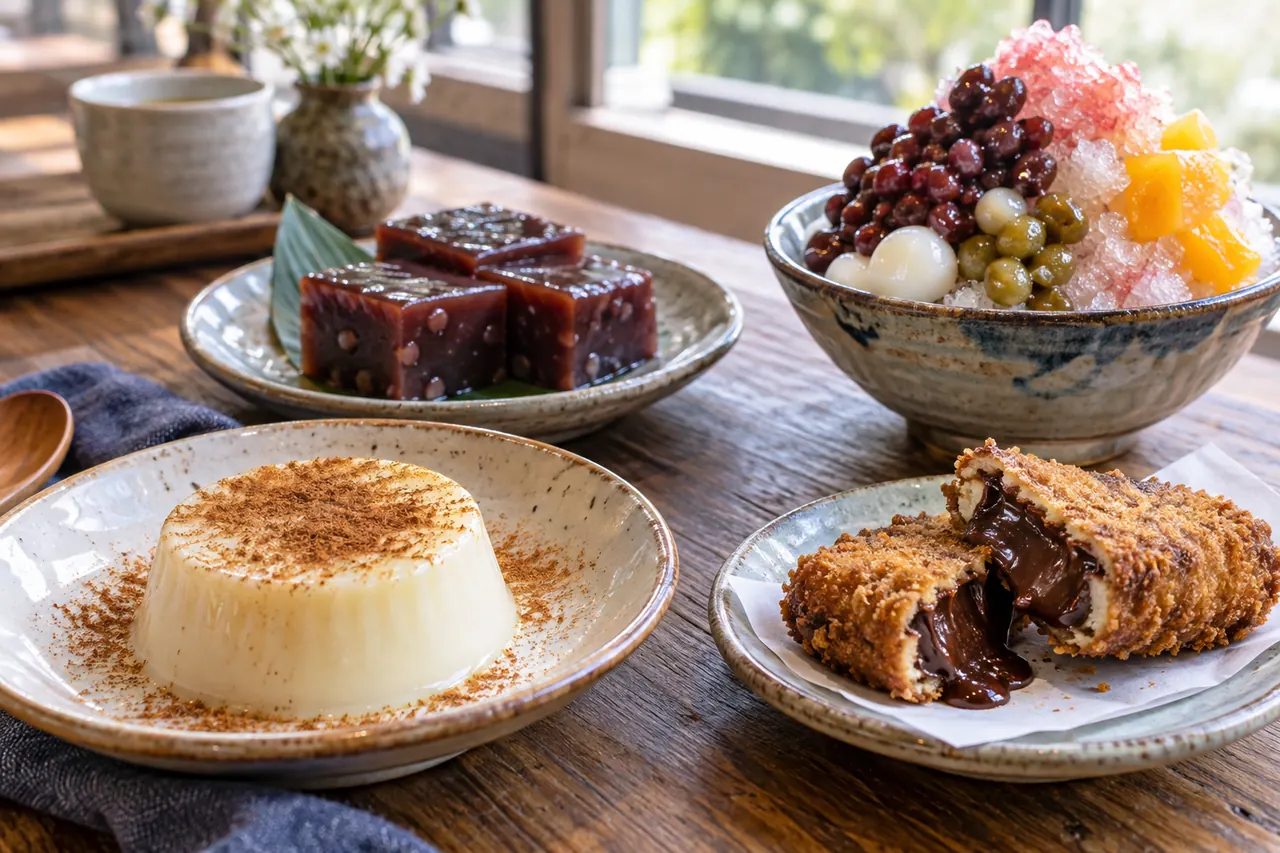
Choose curiosity over a checklist
A dessert can be ordinary comfort food in one place and a surprising discovery in another. Use these examples to choose something to taste; there is no objective ranking of how unusual a dessert is. Some are refreshing, some dense, and some use ingredients that visitors associate with savoury meals. Order a small serving if the texture is new to you.
Build a tasting around an area you already want to explore. A few shops on one walk give you time to ask questions and enjoy a meal between sweets. If you prefer learning how food is made, our cooking vacations guide explains the difference between a demonstration, a workshop and a longer course.
| Option | Best fit | Plan first |
|---|---|---|
| Tavuk göğsü | An unfamiliar pudding texture | Ask about the actual recipe |
| Ais kacang | Cold ice and varied sweet toppings | Choose the toppings and portion |
| Cendol | Coconut, palm sugar and jelly | Confirm additions in your bowl |
| Yokan | A small sliced sweet | Compare flavours and seasonal versions |
Tavuk göğsü: chicken in a milk pudding
GoTürkiye describes tavuk göğsü as a cinnamon-dusted milk pudding traditionally made with finely shredded chicken. The chicken contributes texture to a sweet milk preparation rather than making it a savoury chicken dish. Its name and appearance can surprise a traveller expecting meat and dessert to stay separate.
Ask the seller about the version being served. A pale pudding on a menu is not enough to identify the ingredients, and similarly named commercial preparations can differ. Choose an Istanbul base for the wider food trip and leave room to compare bakeries. Our tourist traps checklist helps you judge a tasting package by its actual stops and inclusions.
Sources: (GoTürkiye: Turkish desserts)
Ais kacang: a bowl of ice with a changing mix
Tourism Malaysia describes ais kacang as shaved ice with sweet toppings, condensed milk and syrups. The combination can include beans and other additions, creating different textures in one bowl.
Look at the toppings before ordering and ask which ones you can change. Eat it while the ice still provides that contrast, rather than saving the entire bowl for a long photography session. A food walk is easier when the rest of the day is light; our traveling tips help you plan a manageable route.
Sources: (Tourism Malaysia: desserts and sweets)
Cendol: green jelly, coconut milk and palm sugar
Cendol is a separate dessert, not simply another name for ais kacang. Tourism Malaysia identifies shaved ice, coconut milk, palm sugar syrup and green jelly strands among its components. The strands give the bowl its distinctive appearance. Preparation and toppings vary, so compare what the vendor actually serves.
If you want to taste both Malaysian options, share small portions across your group and ask about the milk and toppings. Do not assume a coconut-based description tells you everything in the final bowl. Choose a nearby place to sit and make the food stop the main activity rather than a rushed addition between distant sights.
Sources: (Tourism Malaysia: desserts and sweets)
Yokan: a sweet you can slice
JNTO presents yokan as a traditional wagashi made into a jelly-like bar, with sugar and agar and different flavours. Seasonal versions can include chestnut, sweet potato or persimmon. The firm slice and concentrated sweetness make it a different experience from a light dessert served in a large bowl.
Try a small piece with a drink and compare flavours instead of assuming one version represents every shop. For another kind of tasting trip, our chocolate travel guide follows museums and chocolate experiences. Read the product or workshop details before booking.
Sources: (JNTO: seasonal Japanese sweets)
Plan the tasting and your accommodation separately
The booking links below search city stays; they do not reserve a dessert, food tour or cooking class. Pick a location that supports the neighbourhoods and transport you intend to use, then arrange individual tastings or workshops separately. Read the current itinerary if a seller offers a guided food walk.
Tell the vendor or operator about dietary requirements before choosing. Recipes vary, so confirm the ingredients in the serving you order. Leave time for ordinary meals and a rest. Trying one unfamiliar sweet carefully can be more rewarding than buying many dishes just to tick them off.
On a cold-weather food trip, our warm winter drinks guide introduces glögi, glögg and market drinks, including the ingredients and alcohol content to check before ordering.
Good questions, clear answers.
Does tavuk göğsü contain chicken?
The traditional preparation described by GoTürkiye does. Ask the seller about the version being served rather than identifying ingredients from appearance.
Are ais kacang and cendol the same?
No. Both can use shaved ice, but cendol is identified by its green jelly strands, coconut milk and palm sugar preparation.
Do the booking links reserve a food tasting?
No. They search city accommodation. Reserve a tasting, class or food walk separately and read its exact inclusions.
Plan the stay around your visit
Check the location, dates, full price and cancellation conditions before choosing.